Aura Modular UI

Aura Modular UI

Designing a scalable white-label UI module system that enables rapid rebranding, live data integration, and seamless deployment across multiple client experiences

A hand holding a smartphone mockup with a blank screen.

Senior Product Designer

I led the concept, design, and implementation of scalable white-label modules for dynamic UI experiences, focused on flexibility, seamless rebranding, and cross-team usability.

One System, Infinite Brands

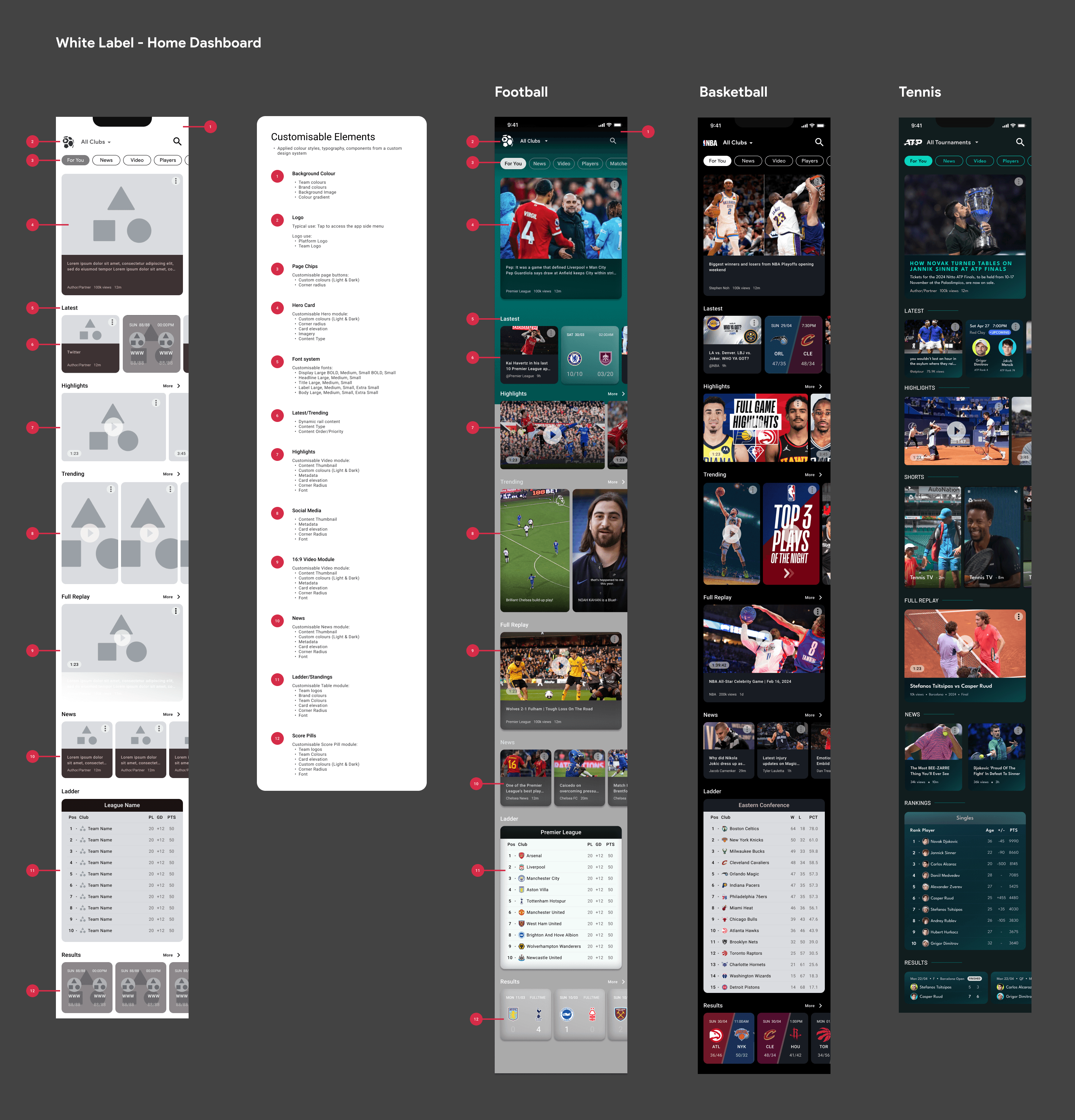
To assist with the rapid workflow of acquiring clients and building experiences efficiently, Aura needed a flexible design system capable of supporting an indefinite number of brands, each with unique visual identities, content structures, and presentation requirements.

The development of these modules would become a shared foundation across design and development teams to build reusable component systems connected to live data streams.

The challenge was not only to create visually engaging modules, but to ensure they could scale across multiple branding systems and typography styles, dynamic content and live backend data feeds. Most importantly the ability for rapid client customisation without redesigning modules from scratch.

Creating a Modular Ecosystem

  • 01

    Research

    Audit existing sports streaming, broadcast, and media interfaces

    Identify common user interface patterns, branding requirements, and usability challenges

    Gather edge cases involving score states, player/team layouts, typography scaling, and dynamic content lengths

  • 02

    Planning

    Define scalable module requirements for multi-brand implementation

    Collaborate with developers to ensure modules could integrate seamlessly with live data streams

    Prioritise scalability, responsiveness, and long-term maintainability across the system

  • 03

    Concepts

    Explore modular layout systems adaptable across multiple sports brands

    Develop early wireframes and rapid prototypes for different client scenarios

    Experiment with flexible visual treatments for scores, statistics, teams, and player data

    Test branding variations

  • 04

    Structure

    Design reusable module frameworks and component systems

    Structure digital signage systems for remote content management

    Standardise module logic to support seamless rebranding across multiple products

  • 05

    Design

    Design high-fidelity white-label UI modules

    Create visually compelling layouts while maintaining system flexibility

    Support rapid client customisation through scalable design patterns

  • 06

    Analysis

    Review module scalability across different brands and use cases

    Evaluate edge case performance and visual consistency

    Validate implementation feasibility alongside front-end development teams

  • 01

    Research

    Audit existing sports streaming, broadcast, and media interfaces

    Identify common user interface patterns, branding requirements, and usability challenges

    Gather edge cases involving score states, player/team layouts, typography scaling, and dynamic content lengths

  • 02

    Planning

    Define scalable module requirements for multi-brand implementation

    Collaborate with developers to ensure modules could integrate seamlessly with live data streams

    Prioritise scalability, responsiveness, and long-term maintainability across the system

  • 03

    Concepts

    Explore modular layout systems adaptable across multiple sports brands

    Develop early wireframes and rapid prototypes for different client scenarios

    Experiment with flexible visual treatments for scores, statistics, teams, and player data

    Test branding variations

  • 04

    Structure

    Design reusable module frameworks and component systems

    Structure digital signage systems for remote content management

    Standardise module logic to support seamless rebranding across multiple products

  • 05

    Design

    Design high-fidelity white-label UI modules

    Create visually compelling layouts while maintaining system flexibility

    Support rapid client customisation through scalable design patterns

  • 06

    Analysis

    Review module scalability across different brands and use cases

    Evaluate edge case performance and visual consistency

    Validate implementation feasibility alongside front-end development teams

  • 01

    Research

    Audit existing sports streaming, broadcast, and media interfaces

    Identify common user interface patterns, branding requirements, and usability challenges

    Gather edge cases involving score states, player/team layouts, typography scaling, and dynamic content lengths

  • 02

    Planning

    Define scalable module requirements for multi-brand implementation

    Collaborate with developers to ensure modules could integrate seamlessly with live data streams

    Prioritise scalability, responsiveness, and long-term maintainability across the system

  • 03

    Concepts

    Explore modular layout systems adaptable across multiple sports brands

    Develop early wireframes and rapid prototypes for different client scenarios

    Experiment with flexible visual treatments for scores, statistics, teams, and player data

    Test branding variations

  • 04

    Structure

    Design reusable module frameworks and component systems

    Structure digital signage systems for remote content management

    Standardise module logic to support seamless rebranding across multiple products

  • 05

    Design

    Design high-fidelity white-label UI modules

    Create visually compelling layouts while maintaining system flexibility

    Support rapid client customisation through scalable design patterns

  • 06

    Analysis

    Review module scalability across different brands and use cases

    Evaluate edge case performance and visual consistency

    Validate implementation feasibility alongside front-end development teams

Custom Theming

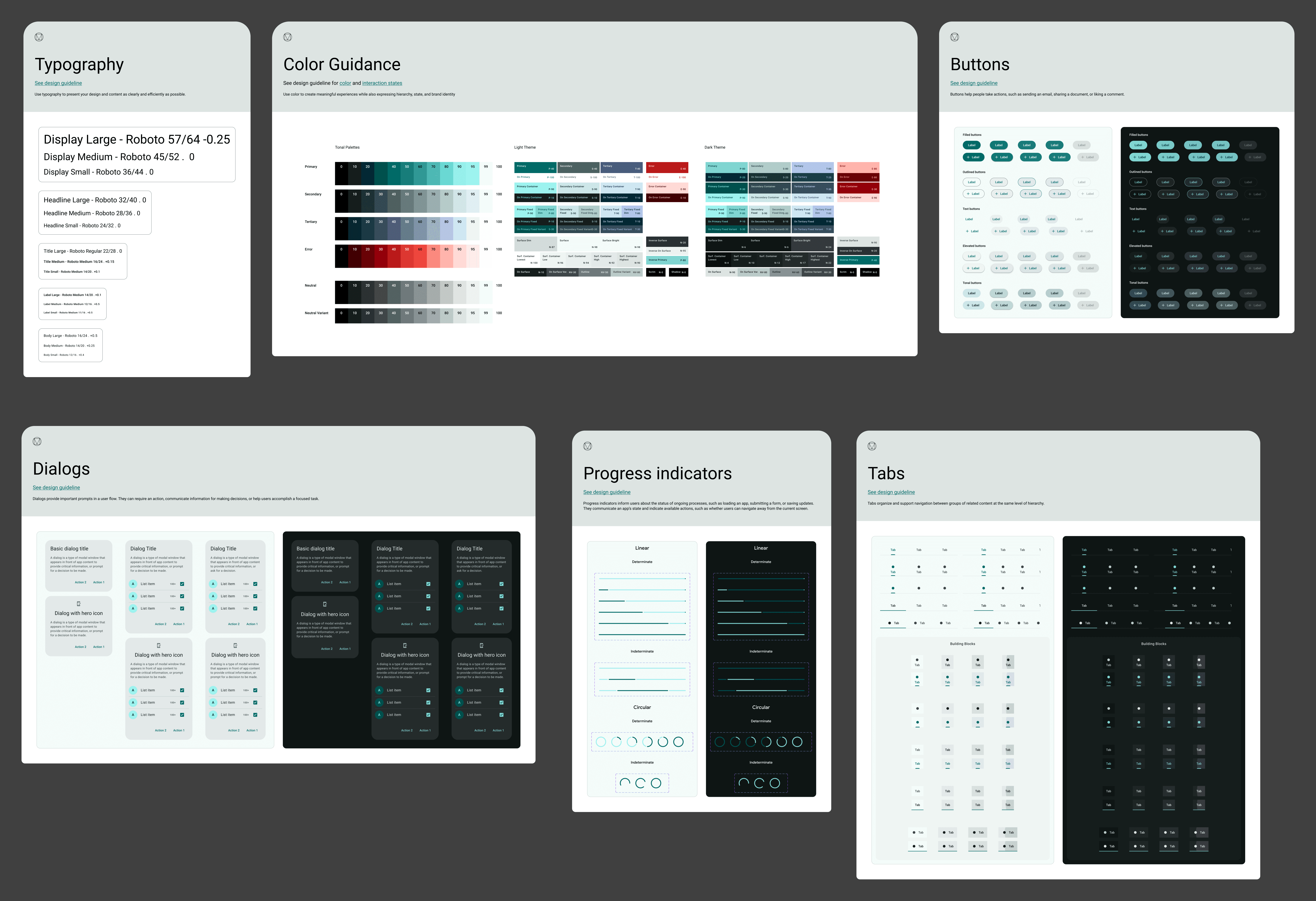
The module system was built using the principles and token architecture of Material Design 3 as the foundation for component scalability and Google's theme builder to quickly integrate our clients colours and variants.

Using Material Design 3 allowed the team to establish a highly efficient and consistent design workflow driven by reusable design tokens including colour, typography, elevation, spacing, and component styling.

This created a shared system between design and front-end development teams.

Design System Scalability

80% Building

+

20% Customising

+

10% Applying

80% of the design system was structured through the Material Design guidelines, enabling rapid creation of branded token systems and reusable UI foundations.
+

80% Building

+

20% Customising

80% Building

+

20% Customising

+

10% Applying

20% involved customising or creating bespoke components to support specific functionality, dynamic content states, and unique layouts not covered by standard Material components.
+

+

80% Building

+

20% Customising

+

10% Applying

10% Applying

10% focused on applying theming and modular components into production ready wireframes, prototypes, and client-facing branded experiences.
10% Applying

Modular Flexibility

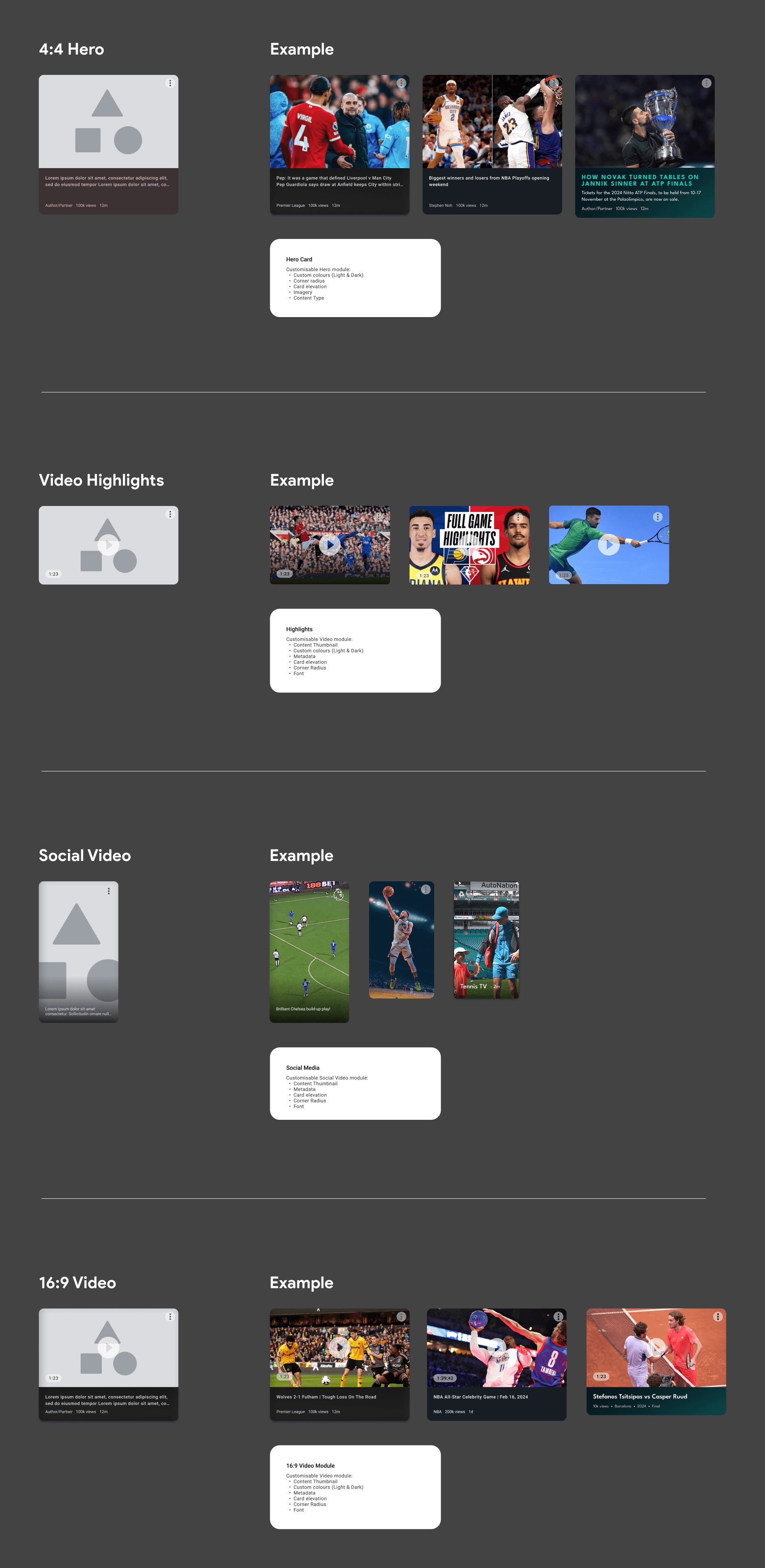
The module system was designed to dynamically scale across multiple layouts while maintaining visual consistency and brand integrity.

Each component was built with flexible sizing behaviours, allowing modules to expand, collapse, and adapt depending on the content type or live data state.

Applying The System

Once established, teams can quickly wireframe, prototype, and build production-ready interfaces adapted to different sports or content types and maintain consistency, accessibility, and visual quality across each implementation.

Traditional Content Layouts

iPhone 17 Pro Max Orange Frame

Pushing The Boundaries

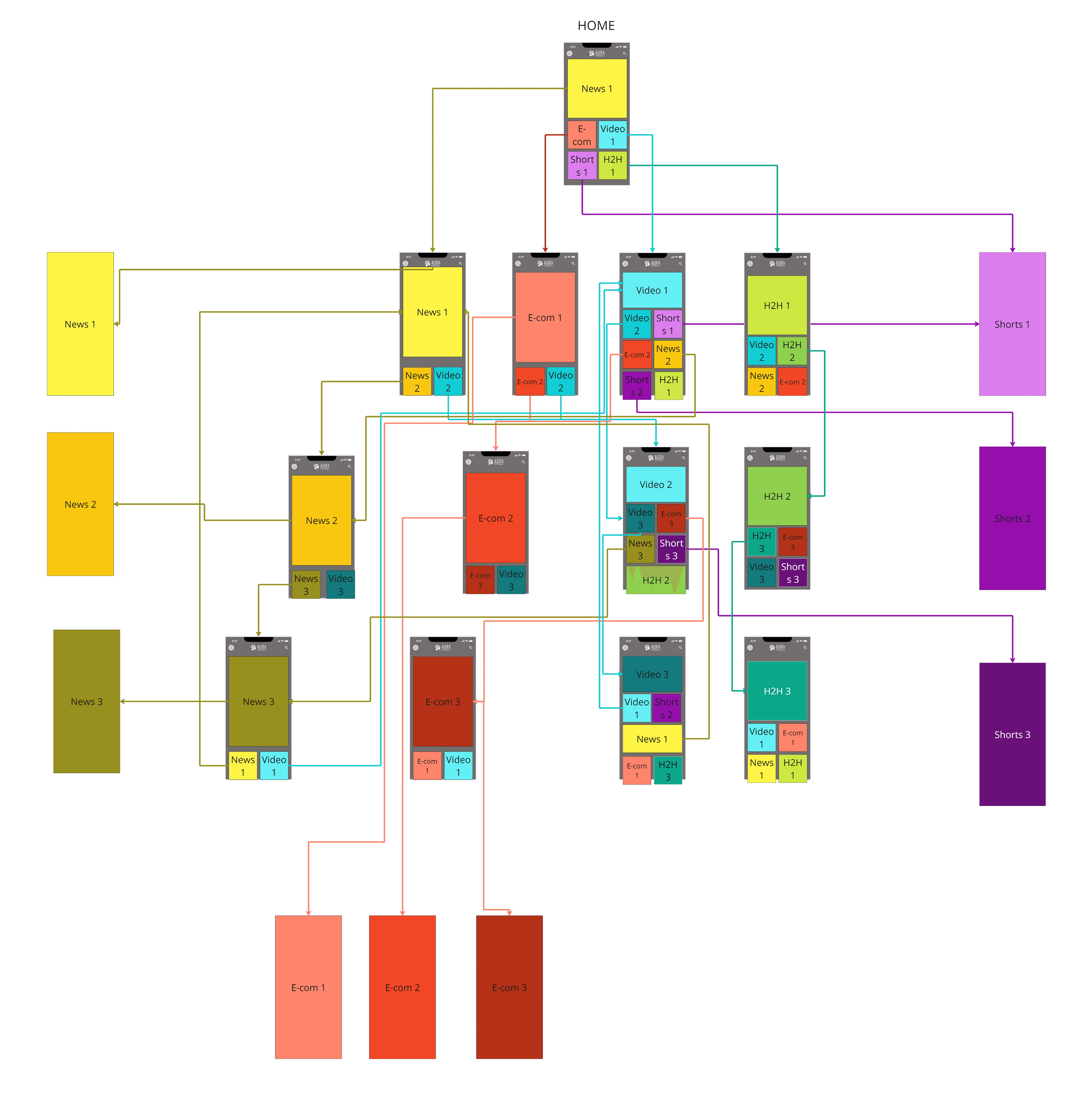
For the continued development of the design system, I designed a layout that would allow for automatic resizing of components depending on the user interactions and navigation actions.

Aura Box AI Userflow

Aura Box AI Userflow

Custom Content Layouts

iPhone 17 Pro Max Orange Frame

Room For Improvement

This project formed an effective basis to scale our experience designs by leveraging a modular approach that allowed us to quickly brand and launch our solutions using this scalable platform.

The power of the platform lay in its ability to adapt as it grows, taking into account new client requirements, new technology advancements, and added features.

Further iterations will bring in new modules, ways of interaction, and custom solutions that build on the adaptability and creative scope of the platform.